
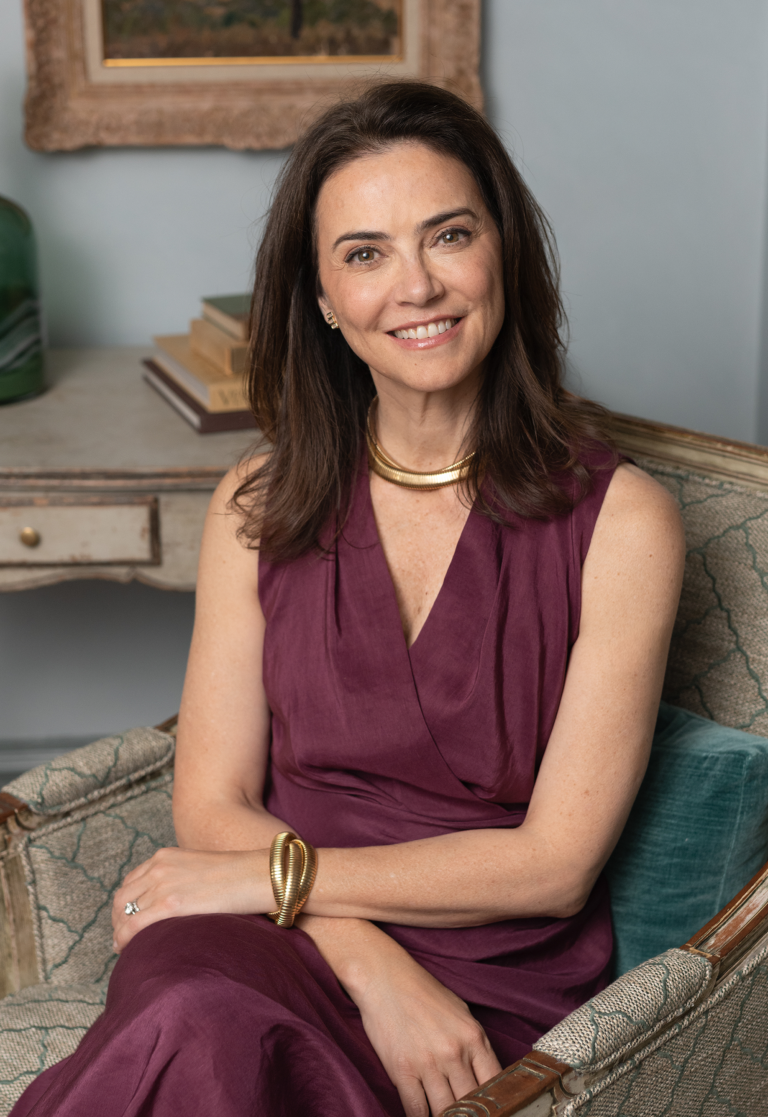
Dr. Laurie Freeman: Welcome. Thank you so much for coming back to NYC-Parents in Action and having this important conversation. Through your research for your first book, you came up with this idea for your second. Can you talk a little bit about that?
Jennifer Wallace: Thank you. As I was researching Never Enough, my book about the growing pressure on young people to achieve more and more, I found in my interviews that parents were struggling with this ‘never enough’ feeling, too. They were struggling with a sense of mattering.
So I wanted to turn my lens to mattering because what I’ve come to realize is that if we do not bolster up this this sense of feeling valued as the adults in our kids’ lives, we are not going to be able to make a dent in the youth mental health crisis. We need to go upstream, take care of the caregivers, so that they can be sturdy sources of support for their kids—first responders to their struggles.
LF: So, in order to help children feel that they matter to us, we also to feel valued and appreciated. Can you talk a little bit about the definition of mattering?
JW: Mattering is a need that’s been wired into us by evolution. For our earliest ancestors, feeling valued by the group meant survival, meant protection, meant access to food and shelter. Feeling like you didn’t matter to the group felt like isolation. It was basically a death sentence. We are wired by evolution to be motivated to matter.
Mattering is not a nice to have, it is a critical human need that all of us throughout our lifespan must have in order to thrive. In modern day, our lives are so busy, so we don’t think about this need, but we feel the effects of not having it. And that is loneliness. That is anxiety. It is depression. It is feeling disengaged. But when we feel like we matter, we show up to the world in positive ways.
So what does it actually look like to matter? You might not have ever heard of this idea of mattering, but you have felt it. It’s that feeling when you’ve been sick and a friend calls to check in on you, or a neighbor drops by with a big pot of soup. I remember the key ingredients with the acronym said, S A I D.
S stands for significance.
A stands for appreciation.
I stands for feeling invested in and investing in others.
D stands for depended on.
These ingredients are both essential for us feeling like we matter, but also ways that we can reinforce and build a sense of mattering in the people we care about in our lives.
Feeling significant means feeling important. What struck me over and over again in my interviews was that when I asked them, “When did you feel like you mattered?” They always talked about the small moments. As humans, we crave mattering in the day-to-day. We crave those social signals that we are important. Think of significant of as the details of life.
 Moving on to appreciation. There are ways to express appreciation that can reinforce a sense of mattering. I think of it as appreciating the doer behind the deed. It’s about who they are, not just what they do.
Feeling invested in and investing in others is when people ask us about our goals or when they support us through a setback. Researchers call it ego extension, which is the idea that we can extend our own egos to include the egos, identities, successes, and well-being of others in our life. And in that way, their successes feel like our successes. You also have to welcome that kind of investment. If you want to be invested in, it means opening yourself up. It means being open to others following up with you, holding you accountable, etc.
The last element or ingredient to mattering is this idea of feeling depended on. It is having people in your life who rely on you. In other words, if you were not on this earth, you would be missed. It’s also having the courage to depend and rely on others. It is that reciprocal dependence and reliance that feeds a sense of mattering in each other.
LF: I think when you say that it’s not just nice to have but essential, it may be news to many of us. I wonder if you can talk a little bit about what mattering means in today’s world.
JW: We are so busy in our lives today. We are so we are being thrown so much at us, so much input, and so much output being demanded of us that just to get through our days as modern parents, sometimes we just have to lock in on autopilot. And so we don’t think about this need. We don’t think about this craving. But we do feel the effects of not having it. And that is loneliness. That is feeling anxiety. It is depression. It is feeling disengaged from our work whether that’s paid work or volunteer work. It’s feeling a lack of purpose. A lot of people talk about this lack of meaning and purpose in their lives. And I will tell you mattering is the pathway to purpose.
You know, 50 years ago, we used to have closer knit communities. We had ecosystems that would deliver this sense of mattering, of feeling valued, and knowing that we add value. And we had time for our relationships and communities, those ecosystems that provided a sense of mattering. But these have eroded and it’s left us with this need going unmet.

LF: How much do you feel like the pandemic impacted this sense of mattering and connecting and not feeling lonely?
JW: One of the negative things to come out of the pandemic was this whole flake culture—the idea of making plans and then cancelling at the last minute—has made us a bit lazy in our relationships. But cancelling sends the signal, “You are not important to me. You are not a priority. I am not protecting this time with you.”
But the key to meaningful relationships is consistency, is intentionality, is sending the signal that they are prioritized and is not cancelling. The fastest way to build relationships is by committing to them. Make it a personal policy in your life to not cancel unless you are sick.
Another thing that I think has come out of COVID and this acceleration of tech in our lives is that we have become less tolerant of friction. We press a button and our food is delivered to us. We don’t have even have to go out and see people.
But a frictionless life is not a meaningful life. A meaningful life is found in the grittiness, the friction of life. It is pushing through inertia to get off our couch, to sit at a restaurant and talk to a friend and sometimes have an awkward conversation or feel frustrated by a friend and talk about it. It’s in that repair. And I think we have forgotten that.
LF: I really appreciate what you’re saying around this idea of avoiding friction and that mattering is very much intersecting with that.
JW: Very much so. Though I’m not here to say that there aren’t some people who should be kept at a distance to protect your own well-being and mental health. I’m not talking about extreme cases. I’m talking about everyday cases. I’m talking about a friend who does something that disappoints you. It’s having to open up and have those friction-full conversations. We build deep relationships is through repair.
 If you really want to invite mattering into your life, ask yourself this ask question: “Am I allowing people in? Do I have relationships where I feel like I can be vulnerable and that people reciprocate by being vulnerable with me? Or do I feel like I have to be perfect to be loved?” In my book, I write about the beautiful mess effect, which is that revealing bits of yourself, being vulnerable, letting people into that messy life of yours actually makes you more authentic to the other person and brings you closer to them.
Again, I’m not saying to open up and reveal everything to everyone in your life, but if you are feeling like you don’t matter as much as you want to, identify those one, two, or three people you feel comfortable with and start building those relationships.
LF: And the lessons are for us are the same lessons for our kids, right?
JW: That is exactly right. Our children’s resilience rests fundamentally on our resilience, and our resilience rests on the depth and support of our relationships. You need to prioritize your own well-being so that you can show up as your best self for the people in my life who depend on you. If we as adults do not feel like we matter, we can’t give that to our kids if we don’t have it for ourselves.
It’s very personal how to meet our needs, but I would highly recommend that you start tuning in to what you need so that you can build yourself up and be your best self for your kids, which is what we are all hoping for. There are ways to become your best self. It means mattering to yourself.
LF: And in doing so, you’re role modeling for your child that they need to matter.
JW: And there is something else we can teach to our kids, which is that the fastest way to feel like you matter is to remind someone else why they do. People are starved to feel like they matter. Be the person that fills their cup, and it will come right back to you immediately.
Because friendship doesn’t just happen. That you’ll just click and ride off into the sunset and be forever friends. But that’s not always how friendship works.
 You and your child have agency when it comes to building friendships, and letting your children know that there is a skill to finding friends, to deepening friendships, and to maintaining friendships.
All of us have struggled with friendships. All of us have experienced loneliness. And when you are a child, you tend to personalize that and feel shame around it like you are not worthy of friendship. Take that shame out and really expose them to the idea that this is normal and that there are going to be transitions in their lives—going to a new school, going to college, relocating, starting a new job—where they are always going to have to build back friendships. This is a skill that we can teach our kids.
LF: So, underlying what you’re saying is that one of the path to mattering is having deep friendships rather than shallow, friction-less ones.
JW: Maya Angelou said that friendship is a bench. Friendship is a place to sit and rest and recover and have people care for us and invest in us. But if you are focused on popularity, on the other hand, you are seeking status and that takes a lot of energy and a lot of mental bandwidth. Those people are not necessarily there for you. That is not a bench. That’s a treadmill.
There’s research that looks longitudinally. Kids who are able to build close, nourishing relationships in the pre-teen and teen years go on to have successful nourishing relationships in adulthood. They learned how to be a friend. That, again, is a skill that must be developed over time. But the skill to being popular is the skill to fitting in.
 Brene Brown has this great phrase that fitting in is the opposite of belonging. So fitting in isn’t knowing who you are and it’s not letting others know who you are. Instead, it’s not standing out. That’s not how we feel known and seen. Those relationships do not deliver a sense of mattering. It’s almost like the fool’s gold of mattering, a false sense of mattering that can easily collapse and it does.
LF: One other thing I wanted to make sure I mentioned but didn’t get a chance to ask you about it: the Mattering Movement that you started. I saw that you have a website, MatteringMovement.com and have developed a curricula for schools to help teachers make kids feel they matter. And it’s super impressive to me what you what you’ve done this research, and then to take it and run with it and try to matter in the world in a very big way.
It’s been so nice to speak with you. Thank you so much for coming back to NYC-Parents and Action and having this conversation. We really appreciate it.

Welcome Back 2026!
We are excited to unveil our programming for the 2026-2027 academic year and to invite you to engage with NYC-Parents in Action.

When Habit Becomes Compulsion: Body Image, Sports Betting, and Screens
Screens are a part of our world. On Wednesday, April 22nd, 2026, Dr. Jodi Gold sat down with PIA Advisory Board member Geoffrey Golia to discuss the benefits of video games, the dangers of sports betting, and the harms of social media.

The Power of Mattering: The Key to a Life of Deep Connection and Purpose
Jennifer B. Wallace sat down with Dr. Laurie Freeman to discuss the power of mattering for both children and adults. Wallace unpacks an urgent case: that the fundamental need of mattering is going unmet in today’s world, how we can find it for ourselves and how we can teach it to our children.

Teen Scene 40th Anniversary Retrospective Interview with Lucy Gianino
A Retrospective Convesation with Lucy Martin Gianino after 40 Years by Melanie Wells This year, NYC-Parents in Action’s Teen Scene 2026 marked four decades of the popular teen panel. The event, like those preceding, owed its impact to an impressive group of NYC independent school teens. Their voices were candid, refreshing, occasionally a bit alarming,

Parenting Scene 2026 Recording
It’s not too late! Stream Parenting Scene 2026 Heads of Horace Mann and Avenues New York with Dr. Aliza Pressman (with live Q&A): A conversation about resilience, raising good humans, and teaching life Missed NYC-PIA Parenting Scene 2026? It’s not too late! We recorded the event and have made it available for streaming until May

Teen Scene 2026 Recap
What is life really like for NYC teens? Real independent school students discuss topics ranging from phones and social media to substances, sexuality, academic stress, and mental health.