 One of the first themes the panel explored was whether teens today can relate to their parents’ teenage years. The students largely agreed that while the fundamentals of being a teenager (wanting independence, taking risks, seeking identity), have not changed much, the environment has. Social media and constant connectivity create a dramatically different backdrop from the one most parents experienced.
Several students stressed that trust is the foundation of a healthy parent-teen relationship. They want parents to know where they are and what they are doing, but in moderation. Many spoke about the tension between safety and surveillance, especially through apps like Life360.
“There should be a recognition that it is constantly happening.”
“I would want my parents to know what I’m doing because if anything were to go wrong, I would want them to know exactly where I am.”
“You should build a level of trust with your parents and be able to communicate where you are without feeling like you can get in trouble for it.”
The teens described high school as a transition point: parents can no longer relate to their children as they did in childhood, and both sides must adjust. Students seemed less opposed to parental involvement than to parental overreach. Repeated checking, tracking, or questioning can feel intrusive; calm, reliable support feels protective.
The panel had nuanced views on school phone bans. Some students appreciated having phones removed during the day because it improved face-to-face interaction and reduced distraction. Others, particularly older students, felt the policies were impractical and took away spontaneity, communication, and memory-making.
“It builds a very nice culture to not have your phone on you most of the day.”
“In school we can have actual conversations…which I think is just a lot more fun.”
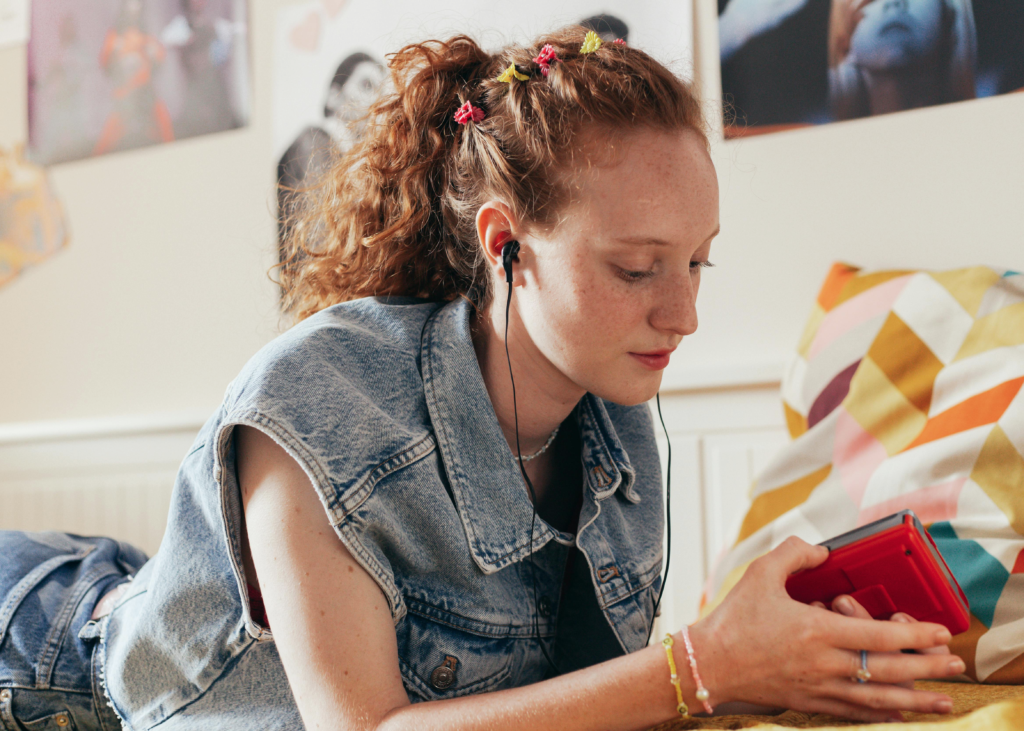
At the same time, some students argued that phones are so embedded in teen life that bans do not fully solve the problem. Students will still find workarounds, and phones also serve real social and logistical functions.
On social media more broadly, teens acknowledged both its harms and their own agency. They described cyberbullying, anonymous Instagram confession accounts, rumor-spreading, body comparison, and social pressure as real and damaging. Several noted that the worst of this often peaks in middle school, though it can persist into high school.
A particularly thoughtful point was made about algorithms and personal responsibility online:
“We do have the control… the more you continue to like, that’s what you’ll keep seeing.”
Students did not support the idea that social media addiction typically warrants “rehab,” though they recognized overdependence and the lure of instant gratification. They viewed screens as deeply integrated into modern life, making balance and critical thinking more realistic than extreme restriction.
The panel was strikingly candid about body image. Girls and boys alike described the pressure to look a certain way, often fueled by social media. Students spoke openly about eating disorders, supplement use, unrealistic fitness standards, and insecurity.
“People compare their bodies, their experiences.”
“I see it with my friends, and I’ve experienced it.”
 One boy noted the normalization of highly muscular male bodies online and the growing trend of young boys taking supplements such as creatine unnecessarily. The teens were clear that body image issues are not confined to girls.
The conversation also turned to nightlife, fake IDs, alcohol, vaping, nicotine pouches, edibles, and gambling. Students described venue parties as more of a freshman-year phenomenon, with older teens more likely to attend house parties or attempt entry to bars using fake IDs. They were matter-of-fact about how fake IDs are obtained and how widespread they can be.
At the same time, the panel repeatedly returned to safety and judgment. Students emphasized the importance of going out with good friends, having a plan, and knowing they can call their parents if needed.
“No matter what happens, I will come get you.”
That line, relayed by one student as a message from their parents, captured one of the evening’s most practical parenting lessons: teens are safer when they know they can ask for help without immediate punishment.
The students also discussed fentanyl awareness and Narcan. Some schools appear to be doing a strong job educating students and even making test strips and Narcan available. They distinguished between scare tactics and honest education, arguing that straightforward information is more effective than absolutist warnings.
The most serious and moving part of the evening centered on stress, anxiety, and suicide. Students described the academic environment at NYC independent schools as intensely competitive. A B+ can feel devastating, not because it is objectively poor, but because it can feel like falling short in a culture that prizes perfection.
“It’s not real failing, but it feels like failing.”
 They spoke about the pressure of college admissions, the stress of comparison, and the challenge of maintaining perspective in hyper-achieving environments. Some appreciated outside help; others valued the independence of managing their own workload. But across viewpoints, there was agreement that teens need grace as well as high expectations.
The discussion of suicide was especially powerful. One teen shared the loss of a friend and reflected with great insight:
“There’s a big difference between feeling alone and being alone.”
That observation seemed to resonate across the room. Students emphasized that someone can appear lively, funny, and socially connected while still struggling profoundly. They urged parents not to treat suicide as a scheduled talking point or a taboo subject, but as part of an ongoing climate of openness, responsiveness, and emotional safety.
“Anyone can feel alone. We’re not physically alone, but mentally feeling alone is a different conversation.”
Several students stressed the value of having trusted adults beyond parents—teachers, advisors, counselors, and mentors—and noted that some schools are expanding mental health education and suicide-prevention training in response to recent tragedies.
In discussing dating and relationships, the panel painted a mixed picture: hookup culture exists, but so do meaningful and longer-term relationships. The students pushed back against simplistic or gendered assumptions, especially around sexual responsibility.
“It’s on both parties.”
 That phrase was repeated in spirit several times: whether the issue is contraception, consent, emotional responsibility, or social pressure, teens want adults to stop assuming that girls alone bear the burden.
The students also challenged one-sided assumptions around pornography, body image, and emotional vulnerability. Girls and boys are both navigating a great deal, and many of the issues adults frame as gendered are, in practice, more shared and complex.
On LGBTQ+ identity, the students described New York City independent schools as generally accepting and resource-rich, with clubs, affinity groups, and teachers who provide support. At the same time, one student thoughtfully reminded the audience that this level of acceptance cannot be taken for granted nationally.
The evening ended on a hopeful note when Lucy asked each student about the future and their dreams. Their answers were moving in their simplicity and ambition: they want meaningful work, creativity, financial stability, peace, happiness, family, and the chance to give back.
“My dream is to have a career that I also feel happy in, not just something that feels like work.”
“My dream is just to find peace.”
“I want to be an advocate, use my privilege as a platform, and pay it forward.”