

Dr. Laurie Freeman welcomed Dr. Chung and noted that executive functioning “is a big topic,” generating a lot of parent interest. She asked Dr. Chung to explain a bit about it.
Dr. Michelle Chung: Thank you for having me. I’m a Clinical Psychologist, with a practice in Manhattan that specializes in anxiety spectrum issues, ADHD, and executive functioning. We’ve been working as executive functioning coaches since 2005. I love this topic. We, as adults, struggle with it too. It’s one of those things we can constantly work on, and improve on.
From a brain science perspective, EF sits in the prefrontal cortex, and continues to develop until solidifying around 25 years; some recent research even pushes that to age 28. So, we have a long runway toward developing these skills.
Three core skills – inhibition, working memory, cognitive flexibility – are the foundation from which we build out planning, problem solving, and time management skills.
The earlier we teach these skills to our kids, the more the neuroplasticity of the young brain can allow kids to learn the skills more easily. This way we can give them the tools they need to get things done the rest of their lives.
I’ll throw out a lot of information today, but please, just pick a few items to take away. And give yourselves patience and compassion, too. We all struggle to learn how to improve our own EF skills, even as we help our children build theirs.
LF: So, to emphasize: we parents need to be kind to ourselves as we struggle to organize ourselves, too, while training our children to do so, and the key is to start when our kids are young. In questions from parents, we noticed anxiety around the subject. We’re talking about helping younger kids, but what about for older kids? Is it too late?
MC: It is NEVER too late. Adults, too, ask about becoming more efficient, more effective. The wonderful thing about our brains is, we are always learning, always growing. It’s never too late.
LF: So, can we rewire our brains, even as adults?
MC: Yes, we can build new habits to create more efficiency, making it easier to meet our goals.
LF: Help us understand concrete ways to achieve this in our kids.
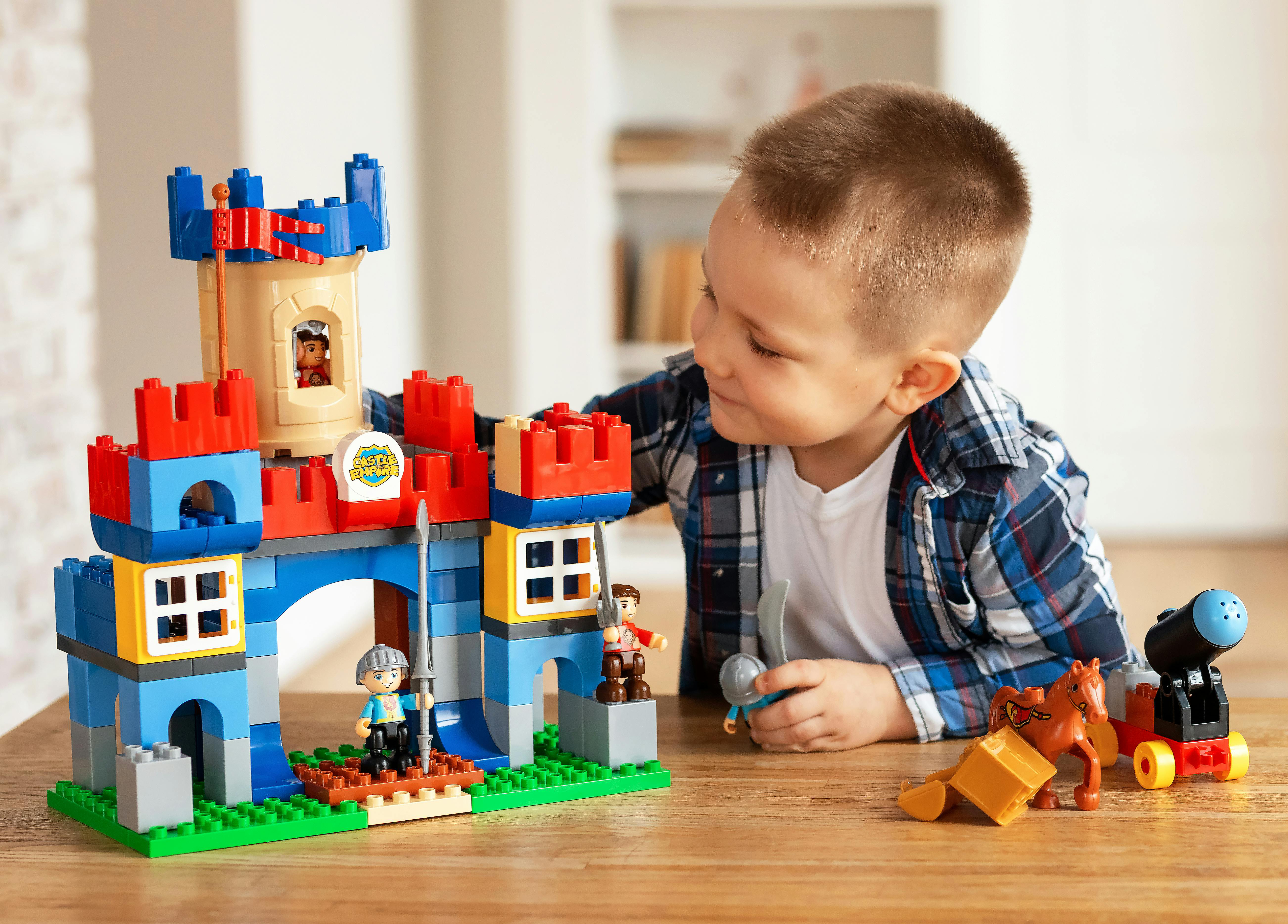
MC: From preschool to elementary, we’ll often see EF either breaking down or working well particularly during efforts to follow directions. Example: If asked to pack a bag with necessary items, some kids are able to choose the bag, find the items needed, and pack them. But some kids sit there and say I don’t know what I should pack. To help them, make it fun. Make it play-based. For example, the game Simon Says helps build EF skills. Building with LEGOs helps. Doing puzzles helps. And here’s a tip for you to help your kids: Problem-solve out loud and DO IT IN FRONT OF YOUR KIDS, so they can hear you.
Example: When preparing to cook a chicken, I looked for a pot to hold it. I pulled out the first one but it was too small. To turn this into a learning moment, instead of just putting the pot back, I’d say, “This pot won’t hold the chicken. I’m going to put it back and get my bigger pot.” Talking out loud as we problem-solve, models for kids the steps we take to meet our goals.
LF: How do we address problems at different age levels?
MC: Many of us are familiar with the school admissions process; even for Kindergarten, good schools look for executive function. Early on, there’s a wide range – some kids pick things up quicker, some cannot. If you think your child may need help, here’s a checklist to use:
- Get a general sense of your child’s peers. Look around – what do you see? Does your child appear to fit in the range of age peers’ skills?
- Are you seeing EF impacting their general functioning in various aspects of life? EF issues can come up in social situations and school situations. Even at home, if you say, “clean up your room,” some kids can do it right away, and some cannot even start.
- Collaborate with your child’s school. It’s a good source to give you a heads up if they’re seeing things that might be of concern.

LF: At any age, parents may see issues develop. Explain how it might present at different ages.
MC: In middle school, homework routines, the use of planners and time management are on the development agenda. Things like forgetting their instruments, or not allowing enough time for homework, may be problems.
In high school, it’s an extension of those same goals. Procrastination is a big issue. Or maybe kids want to do all their homework for the following week on a single Friday night, showing a sense of anxiety or overwhelm. Or, you may see expressions of frustration, teenage ‘tantrums’ or conflicts in the parent/child relationship – many times these are signs of executive function breakdown.
LF: So, in middle school there’s homework routine and time management – what are concrete suggestions to resolve those issues?
MC: For this age group (a very confusing time developmentally with transitions and hormonal changes), they are starting to develop an identity. Parents should give them a sense of autonomy, but they also need scaffolding. You can’t be the ‘lawn mower parent’ creating a totally smooth path and eliminating all struggle or failure, but it’s about shifting from being an enforcer to being a collaborator.
LF: How much should we smooth the path, if, say, the child forgets homework?
MC: Kids innately want to do well, want to feel good about themselves and make parents happy. But if a kid says, “I don’t care,” it may be a sign there’s a skills deficit. Don’t just say “try harder” – ask yourself if they have the skills to feel confident to do what they need to do. “I don’t care” can really mean “I’m overwhelmed.”
LF: And maybe there’s shame around this?
MC: A lot of shame around it: Kids would rather appear uninterested than incompetent. That’s a hard place for them to be. Teach them skills so they have the confidence to try. If they fail, say it’s okay, we’ll try something different and talk about what we learned. It’s a process, a delicate dance of how much to intervene vs. how much to sit back and let things happen. Be their cheerleader, but also be their coach.
LF: You’re suggesting we move away from shame and instead say, we know you may fail but then we’ll discuss what to do next. And this can be de-shaming.
MC: Yes, and let them know that you’ve experienced failing, too, at first efforts. Kids don’t see us struggle – they see the final product. It isn’t usually until their 20s that they see parents as human, fallible and vulnerable. We pressure ourselves to have our EF skills all together in order to teach our kids, but let’s take some of that pressure off. We don’t need to be perfect. Modeling vulnerability and hard work to reverse failure, is really good parenting.

LF: Your child gains more when you’re imperfect and don’t pretend you got here easily. How do you decide, should I run the homework to school because my child left it at home?
MC: If it’s something your child does on repeat, it’s one thing, but if only once it’s another. If they forget only once, you might take it in, but if you see it on repeat, you might say “I wish I could do this for you, but for these reasons, I can’t.” In the moment, you don’t have to reveal much more, just be sure you say you’re unavailable right then, so your child has to figure it out himself. Later, on reflection, you can explain reasons in more detail.
LF: Most parents have the urge to step in, and I think you’re saying it’s okay when it’s a one-off situation, but not if you keep rescuing them over and over. In that case you’re not helping them learn to manage on their own. So just say I’m not available, and later go into detail?
MC: Yes, later you can discuss strategies; e.g., do we need to take a few minutes in the evening to be sure your bag is packed? Or have visual reminders tacked up on a wall, so you can point to them, and not have to nag? Ask, what can we do to help you remember your instrument, or homework? Then you become a collaborative problem solver, helping your kids resolve issues. Type A parents don’t necessarily have Type A kids – if you’re Type A, you may be doing too much for your children. Then they don’t learn to do it for themselves.
LF: If you do all the planning, they don’t develop that muscle.
MC: Yes. Letting them figure it out and maybe fail early on, is the best gift you can give them. By sophomore or junior year of high school it’s harder to help them and the stakes are higher, with bigger consequences. Earlier is easier.
LF: Some parents of high school seniors feel their kids are struggling – any specifics for them?
MC: First, start with validating feelings. You’re trying to break some cycles they’ve developed over years. Say, “Hey I can see this is hard for you.” As much as possible, come from a place of curiosity, a place of collaborative problem-solving, saying, “let’s find out what’s happened here and then maybe we can develop a plan.”
LF: This can help kids relax. Sounds like a small thing, validating feelings first, but it lands profoundly.
MC: It’ll help ensure your child will listen to what you say next. If you see a kid resisting, it’s often an emotional response. Maybe they’re anxious, overwhelmed, don’t even know how to start, or they’re tired just thinking about it. If your child resists, try regulating first. Bring down the emotional temperature by telling a funny anecdote about your day. Bring emotions down a notch, then start the conversation. Calm the body first.
LF: What about procrastinating and its relationship to anxiety? How does it fit in?
MC: With procrastination, we teach a quick, grounding mindfulness exercise. It regulates the nervous system and fight and flight reaction (which prevent EF working well). If you start every homework session with mindfulness, it sets a helpful pattern. Here are two exercises:
- Ask your child to use the five senses to describe whatever they see, right in front of them. This regulates the system and focuses the brain, so you can then choose where you’ll focus next, like on his task at hand.
- For three minutes, jot down everything that comes to mind: your to-do list, your emotions, everything. Then, once you’ve finished this brain dump, pick just one thing to focus on.
- And, as procrastination is an avoidance mechanism, break the task you’re avoiding into steps. (Example: An assignment is due tomorrow. What are my steps?)
- I must read two pages of a book.
- I’ll find the questions I must answer.
- I’ll write the answers.
To follow the steps, first simply pull out the book. Now the activation ball is moving, so it’ll keep moving. Next step can be small, not even open the book, but just, “sit at your desk.” Then pick up the book, then read two pages. Just get that ball started rolling.
If you are only the enforcer and not the collaborator it will affect your relationship. Be a coach.
 LF: So, if there are constant power struggles, it might be time to bring in outside coaching?
MC: Yes, many coaches, if the right fit, will inspire children to do it ‘for the coach.’ We don’t want that forever, but it may help early on.
LF: What about ADHD?
MC: If somebody has an ADHD diagnosis you’ll see EF struggles too. Children with ADHD can use visual reminders, like a family calendar. ADHD brains work better with visual reminders.
I like to use biofeedback or neurofeedback, too, with kids who have ADHD brains. There is an app system called Mightier, which tracks heart rate variability while playing video games. ADHD brains can focus, but this is about self-regulation. It can help kids learn how to pay attention in class even when they don’t want to. The heart rate feedback system can prompt the child to stop and do deep breathing as needed.
There are books too: Smart but Scattered, and for teens, Late, Lost and Unprepared. Our group is also coming out shortly with a book for parents on building EF skills in kids: Smart Is Just the Start: Teaching Kids to Get Things Done.
LF: Thank you! And is there any last advice you want to offer parents?
MC: For concrete strategies you can visit my Substack, which comes right to your email inbox with free handouts and worksheets. And podcasts, also free, are “Focus Forward” and “Full Tilt Parenting for Neurodivergent Children.”
LF: Your overarching message, then, is to remain a caring parent, avoid making your child feel shame, and be aware kids have a lot on their plates. You focused on connecting first, then helping kids learn to regulate themselves – and keeping your relationship strong by planning together, collaboratively, so kids feel less overwhelmed.
MC: Yes, and just pick one or two EF skills to work on in any given month.
This is about creating structures and good habits, which take time to form, so do give it time!
It’ll be a “slow grow,” but it will grow!!

Raising Kids in a Cannabis World: What Parents Need to Know
Raising Kids in a Cannabis World:What Parents Need to Know Practical Advice for Helping Kids Make Healthy Choices By Himani Dixit, MD On September 25, addiction psychiatrist Dr. Shannon Caspersen sat down with psychotherapist and NYC-PIA advisory board member, Geoffrey M. Golia, to discuss the risks associated with cannabis use, offer parental prevention guidance, and

Executive Functioning: Helping Kids Get Things Done
Executive Functioning: Helping Kids Get Things Done How Parents Can Teach Their Kids the Skills to Succeed By Melanie Wells What is executive functioning and why does it matter? NYC-Parents in Action Facilitation Direction, Dr. Laurie Freeman, sat down with clinical psychologist Dr. Michelle Chung for a conversation about the skills that make up executive functioning,

Welcome Back! A Letter from our President
A Letter from our President Back to school can feel like a whirlwind. As we head into the 2025–26 school year, we know parenting feels more complex than ever. Join us as we explore the challenges of parenting through a variety of programming, including expert talks, Parenting Scene, Teen Scene, and our signature Parent Talks.